

THE QUESTION BEHIND EVERY PRESIDENCY

Who is the best
U.S. president?
You decide.

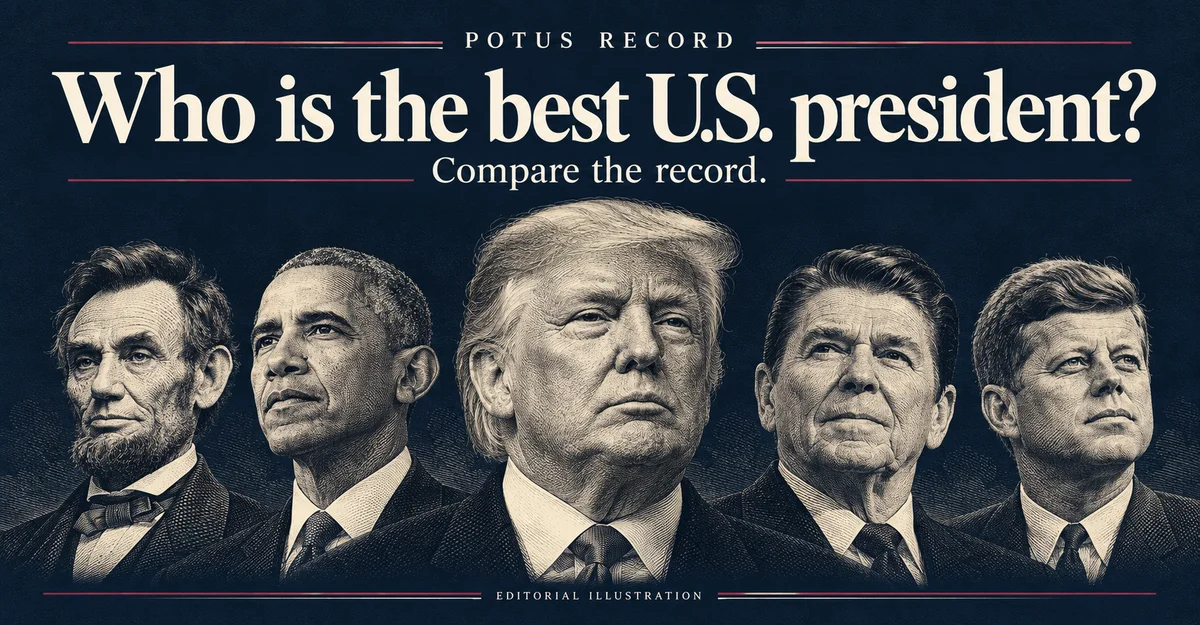
Editorial illustration of Abraham Lincoln, Barack Obama, Donald Trump, Ronald Reagan and John F. Kennedy, with Trump centered. Who is the best U.S. president? Compare the record.
AI-generated editorial illustration. Portrait size reflects our current Trump focus, not a ranking.

Official U.S. records. Compare growth, prices and unemployment. Choose first, then reveal the president.

No account · No overall score · Your judgment

12 completed terms · 1977–2024
BEA & BLS · No overall score

THE RECORD / BEFORE THE NAME

A name can wait.
The numbers can’t.

Real records. Anonymous letters.
The same records continue when you begin.

  1. CompareRead the record
  2. ChooseMake your judgment
  3. RevealSee the name
THE COMPARISON
12 completed terms
CALENDAR WINDOWS
1977–2024
OFFICIAL DATA
BEA & BLS

Equal four-year windows. The same official data for every president. Why these years?

Explore individual measures
OFFICIAL NUMBERS. YOUR VERDICT.

Every measure ranks all twelve terms the same way. The verdict is yours.

Trump II · Day 661 of 1,461 45% of the term

NOW

This week in the record

  1. NewReader Ballot No. 002: best president for the economy since 1977
  2. NewReader Ballot No. 001: the SAVE America Act, with U.S. and worldwide results
  3. Updated2026 midterms: the president’s party lost the House and the Senate in AP race calls
All updates & corrections
01 / COMPARE THE OUTCOMES

Choose the measure. See the record.

How the comparison works

Comparable observations

What economy was inherited—and what followed?

Compare complete windows with inherited conditions in view. Trump’s current term is incomplete and stays outside the completed-term ranking. The years 2–4 option tests sensitivity; it does not allocate credit between presidents.

Read the full comparison
12 completed windows · 1977–2024
Annualized real GDP growth in equal completed windows; not a causal presidential score
RankTerm / years measuredAnnualized
growth
Total
change
11997–2000+4.4%+19.0%
21985–1988+3.8%+16.2%
32021–2024+3.6%+15.3%
41993–1996+3.3%+13.9%
51977–1980+3.2%+13.6%
61981–1984+3.1%+12.9%
72013–2016+2.4%+9.7%
82001–2004+2.3%+9.6%
91989–1992+2.2%+9.2%
102005–2008+2.1%+8.6%
112017–2020+1.5%+6.0%
122009–2012+1.0%+3.9%

Annualized growth is the compound yearly rate between annual GDP levels. Ranks use the displayed 0.1-point precision; “=” marks a tie.

Trump II · in progress

2025: +2.3%. Only one annual observation is available in this edition. Excluded from completed-window ranks; 2026–2028 are not filled with forecasts.

Annual-average real GDP levels, not annualized quarterly growth or Q4-to-Q4 growth. Calendar windows include the January handover. Inherited policies, Congress, the Federal Reserve and external shocks can affect later outcomes. GDP alone does not identify a president’s causal contribution. The current GDP article edition uses the September 30, 2026 source update; April 9 remains selectable for earlier links. The source edition beside the values controls which observations are shown.

CHOOSE THE QUESTION

What do you want
to compare?

Each subject has its own coverage. Read the result, the inherited conditions and the limits of presidential attribution.

Read the comparison method
Comparison coverage & editorial context

“Best” depends on the question. Economic measures use their own defined, completed windows. Diplomacy compares selected dated case studies through the same evidence questions.

Our GDP series covers Carter through Biden, with Trump’s second term shown separately. Household income extends to Nixon and the shared Nixon/Ford window. Lincoln and Kennedy are historical figures in the opening illustration; they are not included in these economic comparisons. Claims, promises and military records each state their own coverage.

Evaluate liberal democracy and constitutional liberty, Christian heritage and religious freedom, limited government, military strength and U.S. sovereignty. Read the legal record and examine the effects on freedom, safety and national interests.

CURRENT ADMINISTRATION / UNDER SCRUTINY

A claim starts the question.
The evidence carries it.

Explore 24 major themes, the measure behind each number and the limits of the comparison. Announcements and achieved outcomes remain distinct.

Examine claims & results

DIPLOMACY & SECURITY

Liberal democracy.
International order.

Liberty & rightsRule of lawSecurity cooperationPeace & conflict
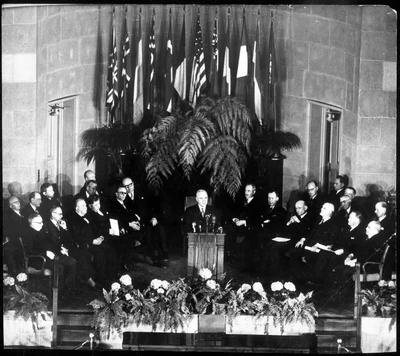
Harry S. Truman speaks at a podium with the foreign ministers of the NATO signatory nations seated behind him.
Photographed April 4, 1949. New York Times Paris Bureau / Harry S. Truman Presidential Library and Museum, National Archives (306-NT-355C-24).

Compare selected historical and current presidential case studies in freedom, rule of law, security cooperation and peace. Read the goal, action, established result and open questions, then follow the current briefs and regional map.

Compare presidents on diplomacy & security
02 / THE PROMISE TEST

What was promised.
What was delivered.

Compare seven selected commitments across four administrations. Read the official evidence, assessment basis and number of records in each status.

Compare promises
03 / THE COST OF WAR

Against whom?
For how long? At what cost?

Iran, Iraq and Afghanistan: compare the operation window, U.S. casualties, adversary strength at the time and the limits of official damage reports.

Compare military operations

PRESIDENTS & CONGRESS

The midterm record.
Seats and control.

Read every midterm from 1934 through 2022: president-party House seats and separate House and Senate control outcomes, with official sources and visible limits. In 2026, the president’s party lost both the House and the Senate in Associated Press race calls; the final House seat count is still pending.

House seat change for the president’s party at each midterm, 1934–20221934: +9; 1938: −72; 1942: −45; 1946: −56; 1950: −28; 1954: −18; 1958: −50; 1962: −6; 1966: −47; 1970: −12; 1974: −48; 1978: −14; 1982: −26; 1986: −4; 1990: −8; 1994: −54; 1998: +4; 2002: +8; 2006: −30; 2010: −64; 2014: −13; 2018: −42; 2022: −9. 2026: Republicans lost House and Senate control in race calls; seat change pending.202619342022
Democratic presidentRepublican presidentAbove the line: seats gained · below: seats lost · 2026: both chambers lost (race calls), seat count pending
Explore Presidents & Midterms

READER BALLOT No. 001 OPEN WORLDWIDE

The SAVE America Act.
Your call.

Americans are split over who gets to vote. Here, every reader gets a ballot — and America’s answer is counted beside the world’s.

Supporters say

Only U.S. citizens may vote in federal elections. Proof at registration and photo ID at the polls make sure of it.

Opponents say

Eligible citizens without a passport or birth certificate at hand would find it harder to register, and some would not vote at all.

Both sides are counting. Add your ballot — and your country.

The House passed the Safeguard American Voter Eligibility Act, or SAVE America Act, 218–213 on February 11, 2026. It would require documentary proof of U.S. citizenship to register to vote in federal elections, require photo identification to cast a ballot and direct states to remove noncitizens from voter rolls. On March 26, 2026, a Senate motion to end debate on its voter-ID amendment failed 53–47; ending debate requires 60 votes.

Unscientific reader poll: results reflect readers who chose to answer, not the U.S. public. One ballot per reader. We keep the two answers, the country and U.S. state Netlify reports and a one-way code made from the connection — no city, names, emails or raw IP addresses.

POTUS RECORDNo. 001Reader ballot · opened November 11, 2026

The count is open. Be among the first ballots.

Fill one oval in each question.

1 / 2Should Congress pass the SAVE America Act?
2 / 2If it had become law before the 2026 midterms, how would the results have changed?

Opens after question 1.

Where ballots come fromU.S. readers · one tile per state

The ballot is open in all 50 states and D.C.

THE STANDARD

A claim is the starting point.
The source is where scrutiny begins.

Official releases describe an administration’s own record. We separate those claims from calculations, label missing evidence and expose each comparison’s limits. Read our method

Help shape the record

What should we add?

We’re continually expanding POTUS RECORD. Which presidential achievements or comparisons should we add? What accomplishments matter most when judging the greatest U.S. presidents? Share your suggestions—links to official sources are welcome. Suggestions are private editorial input. We’ll review them and add records supported by official sources.

Prefer email? Send suggestions or corrections to suggest@potusrecord.com. Suggestions and corrections are reviewed privately by POTUS RECORD and are not posted publicly.

Official source links are optional. Please don’t include personal information. Up to 4,000 characters.

Claims, context & related technologyThree public debates

The debates.
The questions behind them.

Presidential language, official records, and the questions they raise. Each card also includes labeled advertising from the publisher or a related company.

Includes advertising from WisdomLink Studio Inc.

Concept illustration of source documents and a magnifying lens, representing information verification
AI-generated concept illustration

01 / INFORMATION & TRUST

Fake News

What makes a claim worth trusting?

The official record

The Trump White House launched a Media Bias portal to challenge reporting it describes as fake news.

White House announcement / December 1, 2025 (opens in a new tab)
What to distinguish

An administration's label is not independent proof. Trace each claim to its original source and supporting evidence.


Includes advertising from WisdomLink Studio Inc.

Concept illustration of an anonymous ballot, a ballot box and audit records, representing voting verification
AI-generated concept illustration

02 / VOTING & VERIFICATION

Election Fraud

Can the process be independently checked?

The official record

President Trump’s March 31, 2026 order called for citizenship verification and prioritized investigations of election-related violations.

Executive Order 14399 · §2 (PDF) / March 31, 2026 (opens in a new tab)
What to distinguish

Issuing an order does not establish that fraud occurred or that its provisions are in effect. Claims require case-specific evidence.

Publisher & advertising disclosurePOTUS RECORD is published by WisdomLink Studio Inc. Advertisements in this section promote the publisher’s own initiatives and those of WisdomLink Inc., a related company. These patent-application and design-IP initiatives are under development. They are not government-endorsed or performance-certified, and are not used to validate or score presidential records.

Advertise on POTUS RECORD

Contact WisdomLink Studio Inc., the publisher, about advertising opportunities.

Advertising inquiries (opens your email app)