THE PRESIDENTIAL STANDARD / A READING FRAME

Liberty.
Faith.
Presidential power.

What should a president protect?
What does the record actually establish?

Constitutional freedom, religious liberty and public responsibility are standards to examine through laws, actions and results. Begin with the founding texts. Follow the evidence into presidential policy.

Begin with the constitutional frame
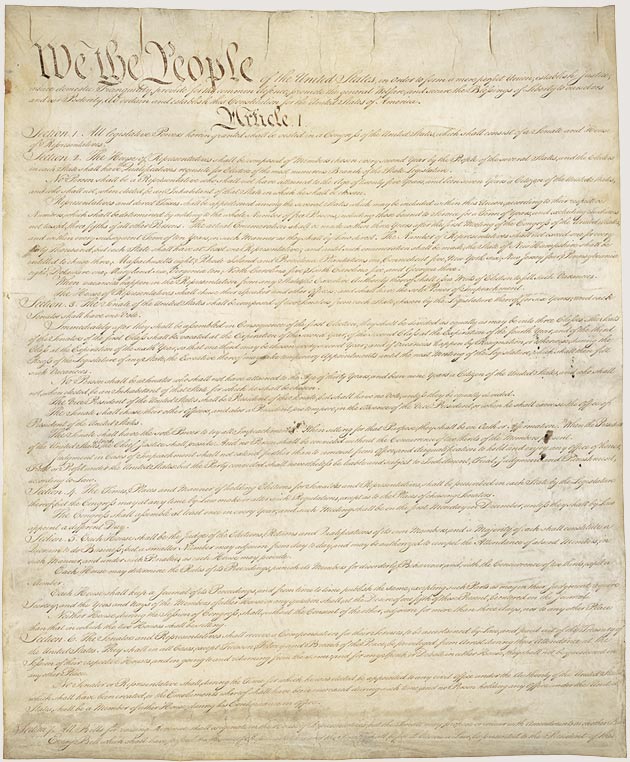
Archival reproduction of page one of the United States Constitution, signed September 17, 1787; National Archives.
U.S. Constitution, page 1 · signed September 17, 1787. Archival document, not a presidential performance record. U.S. National Archives (opens in a new tab).

FIVE AXES / ONE CONSISTENT STANDARD

Ask the question.
Inspect the record.

  1. Liberal democracy & constitutional liberty

    Did presidential power protect freedom and remain accountable?

    Examine individual liberty, due process, religious and political expression, separation of powers and lawful transfers of power.

    • Constitutional authority and limits
    • Civil liberties and equal protection
    • Checks, oversight and legal accountability
    Read the constitutional foundation
  2. Christian heritage & religious liberty

    Could people practice their faith without government coercion?

    Examine Christian heritage, freedom of worship and conscience, and government treatment of religious institutions. The same protections and evidence questions apply to other faiths.

    • Freedom to worship and celebrate Christmas
    • Religious conscience and institutional autonomy
    • Government burdens and available legal remedies
    Examine religious-liberty records
  3. Limited government & economic freedom

    What happened to government size, burdens and individual choice?

    Trace spending, receipts, debt, regulation and documented institutional changes. Smaller government is an evaluation preference; announced cuts are not measured savings.

    • Spending and receipts as shares of GDP
    • Debt, tax burdens and documented agency changes
    • Legal limits, implementation and effects
    Compare federal finances
  4. Military strength & deterrence

    Did capability protect the country, and at what cost?

    Examine readiness, recruitment, defense access, deterrence and military results alongside financial and human costs.

    • Capability and readiness evidence
    • Implemented defense arrangements
    • Expenditure, casualties and civilian protection
    Examine security records
  5. Sovereignty & American interests

    What did each agreement preserve, commit and deliver?

    Examine U.S. autonomy and national interests through the actual terms of alliances, treaties, trade agreements and enforcement actions.

    • Authority, obligations and retained discretion
    • Entry into force and actual implementation
    • Security, trade and household consequences
    Compare diplomacy and security

01 / THE CONSTITUTIONAL FRAME

Freedom under law.
Power with limits.

Liberal democracy asks whether public power is accountable, rights are protected and political authority can change peacefully. Presidential rhetoric belongs beside constitutional obligations and the legal record.

Rights, faith and the founding declaration

they are endowed by their Creator with certain unalienable Rights

The Declaration refers to a Creator and divine Providence while asserting liberty and government by consent. These references belong in a discussion of America's religious heritage; the words alone do not establish a denomination or national religion.

Limited power, protected conscience

but no religious Test shall ever be required as a Qualification to any Office or public Trust under the United States.

The Constitution separates legislative, executive and judicial power. Article VI rejects religious tests for federal office. Evaluate presidential conduct against constitutional authority and restraints.

The freedom to practice religion

Congress shall make no law respecting an establishment of religion, or prohibiting the free exercise thereof

The First Amendment protects religious exercise alongside speech, press, assembly and petition. Christian worship and freedom of conscience are part of this inquiry; constitutional protections extend across faiths.

02 / CHRISTIAN HERITAGE & RELIGIOUS LIBERTY

Faith in public life.
Freedom of conscience.

Christian heritage is part of American history and public life. Religious liberty also protects belief and worship from government interference, including the freedom of people of other faiths and people with no religious belief.

Historical recognition and federal holidays do not establish an official national religion. Christmas is a federal legal holiday; that record does not support a claim that Christmas is banned in the United States.

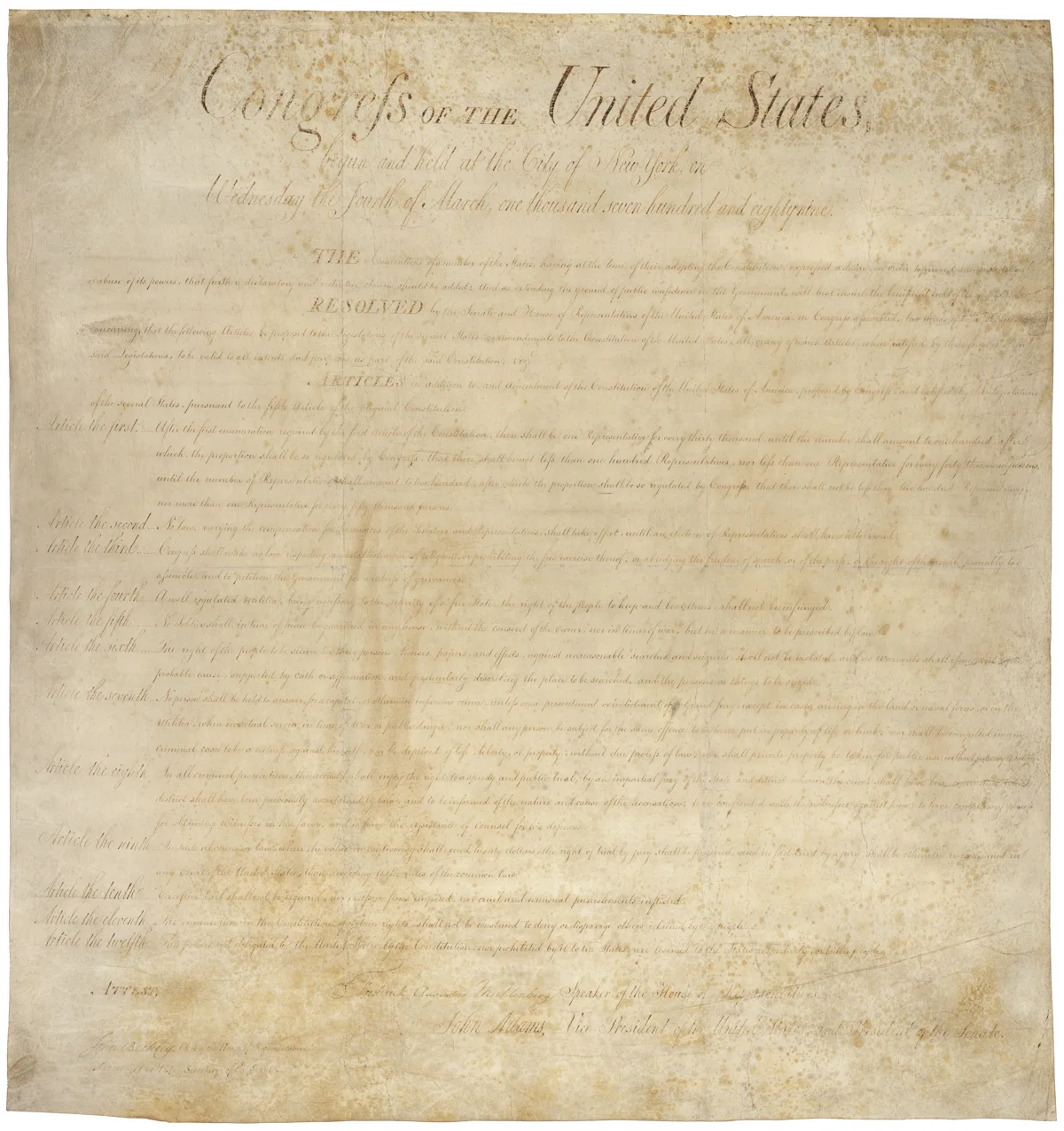
The 1789 congressional resolution proposing twelve constitutional amendments, with religious liberty addressed in Article the third.

THE ORIGINAL TEXT / NATIONAL ARCHIVES

A freedom written
into the record.

“Congress shall make no law respecting an establishment of religion, or prohibiting the free exercise thereof”

First Amendment · religious-liberty clause

Proposed by Congress
First Amendment ratified

Congress’s proposed Bill of Rights, shown in full. The religious-liberty provision appears as “Article the third”; Articles 3–12 became the first ten amendments. Archival context · National Archives.

Read the original transcript (opens in a new tab)

William J. Clinton /

Religious Freedom Restoration Act of 1993 (Public Law 103-141)

Law enacted; later constitutional scope narrowed

Goal
Restore the compelling-interest test and provide a claim or defense for persons whose religious exercise is substantially burdened by government.
Action
Congress passed H.R. 1308 and President Clinton approved it November 16, 1993.
Established record
Enacted statute. Section 3 prohibits substantial burdens unless application to the person furthers a compelling governmental interest by the least restrictive means, and provides judicial relief.
Limits
RFRA is not an unconditional exemption or a protection limited to Christianity. City of Boerne limited the original state/local reach; the verified 2024 definition covers the federal government and specified entities. These sources establish no aggregate religious-exercise outcome or total actual expenditure.

Barack Obama /

Executive Order 13559 — Fundamental Principles and Policymaking Criteria for Partnerships With Faith-Based and Other Neighborhood Organizations

Historical executive order issued

Goal
Strengthen faith-based and other neighborhood organizations' ability to provide services while observing constitutional protections.
Action
Amended EO13279 to set equal eligibility and religious non-discrimination principles, protect beneficiaries, separate explicitly religious activities from directly funded social services, require voluntary religious participation, and establish a working group.
Established record
Signed presidential agency directive with published requirements; it recognizes organizational religious autonomy while imposing beneficiary and funding safeguards.
Limits
This is a historical 2010 directive. Direct federal social-service funding remained distinct from explicitly religious activity, and the order created no independently enforceable right or benefit. Later rules were not comprehensively reviewed. Total actual costs and service-delivery or discrimination outcomes are not established here.

Donald J. Trump (first administration) /

Executive Order 13798 — Promoting Free Speech and Religious Liberty

Historical executive order issued

Goal
Guide executive-branch enforcement of religious liberty protections and religious/political speech.
Action
Directed protection of religious and political speech to the extent permitted by law; directed Treasury's treatment of certain religious speech within existing legal limits; instructed departments to consider conscience-related preventive-care regulations and AG to issue guidance as appropriate.
Established record
Signed and published presidential directive. Section 3 says consider issuing amended regulations; it is not itself the final regulation.
Limits
The order did not repeal 26 U.S.C. §501(c)(3), grant an unconditional campaign-speech exemption or itself complete later agency rules. Directions remained subject to existing law and appropriations. Total costs and downstream protection outcomes are not established. The later religious-liberty commission is documented separately below.

Joe Biden /

Religious Freedom Day, 2024

Proclamation issued

Goal
Affirm freedom of worship and conscience and oppose religious persecution.
Action
Proclamation 10697 designated January 16, 2024 Religious Freedom Day and reaffirmed the rights of people of every faith or no faith.
Established record
The proclamation and stated policy are verified. This was not a new statute or a measured reduction in interference with religious exercise.
Limits
A commemorative declaration does not establish implementation, judicial remedies or nationwide protection outcomes. Comparable actual expenditure and outcome measures are not established by this source.

Donald Trump II /

Anti-Christian bias review & religious-liberty commission

Task force and commission established; commission extended

Goal
Protect Christians from unlawful discrimination and examine threats to religious exercise and conscience.
Action
EO 14202 established a Justice Department task force. EO 14291 established the Religious Liberty Commission on May 1, 2025. EO 14354 continued the commission until September 30, 2027.
Established record
The signed directives and legal continuation are verified. An August 7, 2026 notice scheduled an August 17 meeting to finalize the commission report; the notice does not establish adoption or publication of that report.
Limits
Allegations of anti-Christian conduct in the order are administration assertions, not independently established findings here. Bias reduction, completed reports and total actual costs are not verified. The commission's remit includes religious liberty across faiths; actions remain subject to applicable law and appropriations.

03 / LIMITED GOVERNMENT

Measure the government.
Then judge the change.

A claim to reduce government needs a defined baseline, legal authority and implementation evidence. Spending, receipts and debt as shares of GDP measure different things. An announced cut does not establish lower completed spending or a better public outcome.

Read budget results alongside Congress, inherited obligations and the economic denominator. Agency closures, reorganizations and staffing announcements require their own evidence of legal status, services and costs.

04 / MILITARY STRENGTH

Capacity to defend.
Responsibility for the cost.

Military strength involves people, training, equipment, logistics and alliances. Recruiting targets and accessions are useful measures; recruiting success alone does not establish overall readiness or strategic effectiveness.

Assess commitments separately from operational results. Expenditures, war costs and casualties belong in distinct measures with their own dates and definitions, alongside the constitutional allocation of war powers.

05 / NATIONAL SOVEREIGNTY

National authority.
International choices.

Examine who holds decision-making authority, what obligations an agreement creates and how public institutions remain accountable. Assess the specific obligations and outcomes of each agreement against U.S. sovereignty and national interests.

An agreement’s signature, entry into force, implementation and outcome are separate milestones. Trade balances and economic results also require defined periods and context; they do not by themselves prove a president caused the change.

READ THE ORIGINALS / REVIEWED OCTOBER 6, 2026

The source register.

Official texts, dated policy documents and court records used in this edition. Source dates, precise locators and verification records remain visible for inspection. Linked collections provide their own source registers.

Download the source record (JSON)
  1. July 4, 1776 · founding declaration

    Declaration of Independence: A Transcription (opens in a new tab)

    Opening statement of rights; concluding divine Providence language

    Verification record
    Verified
    2026-10-06
    SHA-256
    5733f05b80274a8ac62f69184010f88500247b36643926519def6b8da48e2584
  2. September 17, 1787 · signed in convention

    The Constitution of the United States: A Transcription (opens in a new tab)

    Articles I–III: separate branches; Article VI: federal religious-test prohibition

    Verification record
    Verified
    2026-10-06
    SHA-256
    dbc776e7483d4d87021197604906b62d6a682077ba12b5e974989d96bc5de511
  3. December 15, 1791 · ratification

    The Bill of Rights: A Transcription (opens in a new tab)

    Amendment I: religious exercise, non-establishment, speech, press, assembly and petition

    Verification record
    Verified
    2026-10-06
    SHA-256
    c7566a8f1881d5db9e7adf201d329168a9e6bf9a32efc19ff14f67e3339f76d2
  4. 2024 U.S. Code edition

    5 U.S.C. §6103 — Holidays (United States Code, 2024 Edition) (opens in a new tab)

    5 U.S.C. §6103(a): Christmas Day, December 25

    Verification record
    Verified
    2026-10-06
    SHA-256
    6909183aef19c2e16b1540ff3058f3a1bbb2c5ca13f249dee494f059604ea28f
  5. November 16, 1993 · law approved

    Religious Freedom Restoration Act of 1993 · Public Law 103-141 (opens in a new tab)

    107 Stat. 1488–1490, §§2–3: substantial burden, compelling interest and least restrictive means

    Verification record
    Verified
    2026-10-06
    SHA-256
    a616382ca73568cdc5800dedc2d2f9559a7a32570bc4e68d84e05d4581cf8870
  6. November 16, 1993 · remarks; published November 22

    Clinton: Remarks on signing the Religious Freedom Restoration Act (opens in a new tab)

    Weekly Compilation of Presidential Documents, pp. 2377–2379

    Verification record
    Verified
    2026-10-06
    SHA-256
    46be9a3ff59b68bd26c328bb9cc93f5f7281acb90c35a436b3e1bcf496b56d14
  7. June 25, 1997 · decision

    City of Boerne v. Flores · Supreme Court opinion (opens in a new tab)

    521 U.S. 507: Congress exceeded its Fourteenth Amendment enforcement power in applying RFRA to state/local government

    Verification record
    Verified
    2026-10-06
    SHA-256
    250f743d1686b4df316b6f5f3c926c96052359f0b4c0394563a8cdfc8b962d9b
  8. 2024 U.S. Code edition

    42 U.S.C. §2000bb-2 · RFRA definitions (opens in a new tab)

    §2000bb-2(1)–(2): federal government and covered entities

    Verification record
    Verified
    2026-10-06
    SHA-256
    b2e6e5d1ad59d02faff4d0e42861fa8ddb75ad9a06b9defb6c267a2f504820ad
  9. November 17, 2010 · signed; published November 22

    Executive Order 13559 · Faith-based and neighborhood partnerships (opens in a new tab)

    75 FR 71319–71323, §2: equal eligibility, religious autonomy, funding and beneficiary safeguards

    Verification record
    Verified
    2026-10-06
    SHA-256
    67abaf025bb4c94b22abe06e2f6da7abe8464c51e8095338126a2bc037b507de
  10. May 4, 2017 · signed; published May 9

    Executive Order 13798 · Promoting Free Speech and Religious Liberty (opens in a new tab)

    82 FR 21675–21676, §§2–5: speech, proposed conscience protections, guidance and legal limits

    Verification record
    Verified
    2026-10-06
    SHA-256
    92518b168d9f91356c8df5f6a0a3168d8127c77bffca8101ff37ab83b9935876
  11. January 12, 2024 · signed; January 16 observance

    Proclamation10697 — Religious Freedom Day,2024 (opens in a new tab)

    Proclamation 10697, 89 FR 3535–3536

    Verification record
    Verified
    2026-10-06
    SHA-256
    6c2a46abad472dc622231c5b3df45330e4690c4af7b03546eb4d7cf928a828f2
  12. February 6, 2025 · signed; February 12 publication

    Executive Order 14202 — Eradicating Anti-Christian Bias (opens in a new tab)

    EO 14202, 90 FR 9365–9368, §§2–5: task force, duties and limits

    Verification record
    Verified
    2026-10-06
    SHA-256
    ee7b5cadcbd58e1e7b296e6ce6e73f734b93d9933915d6e4483aa3b7dca1d02a
  13. May 1, 2025 · signed; May 7 publication

    Executive Order 14291 — Establishment of the Religious Liberty Commission (opens in a new tab)

    EO 14291, 90 FR 19417–19419, §§2–4: advisory commission and legal limits

    Verification record
    Verified
    2026-10-06
    SHA-256
    656776ce1886495e2d97e49402be0e50cf411f53a046034d106fd7a8e2cdf65b
  14. September 29, 2025 · signed; effective September 30

    Executive Order14354 — Continuance of Certain Federal Advisory Committees (opens in a new tab)

    EO 14354, §1(p): continuation until September 30, 2027

    Verification record
    Verified
    2026-10-06
    SHA-256
    e5fa02c283b178eaf2b8ac73491930f3618133267310b5122602dc329af280d7
  15. August 7, 2026 · published; meeting scheduled August 17

    Meeting of the Religious Liberty Commission (opens in a new tab)

    91 FR 51180–51181: notice and agenda, not proof of meeting or final report

    Verification record
    Verified
    2026-10-06
    SHA-256
    7cf02caa1da541c0bcdc6cdd4236af3b1f22b2714ec4fc81a3e2bdb569c46899